

Fagbemi Pushes Copyright Commission to Tackle Piracy, AI and Royalty Accountability
At the Nigerian Copyright Commission's annual retreat, the Attorney-General said the agency's success should be measured by what creators actually earn, not by how active its enforcement looks on paper.
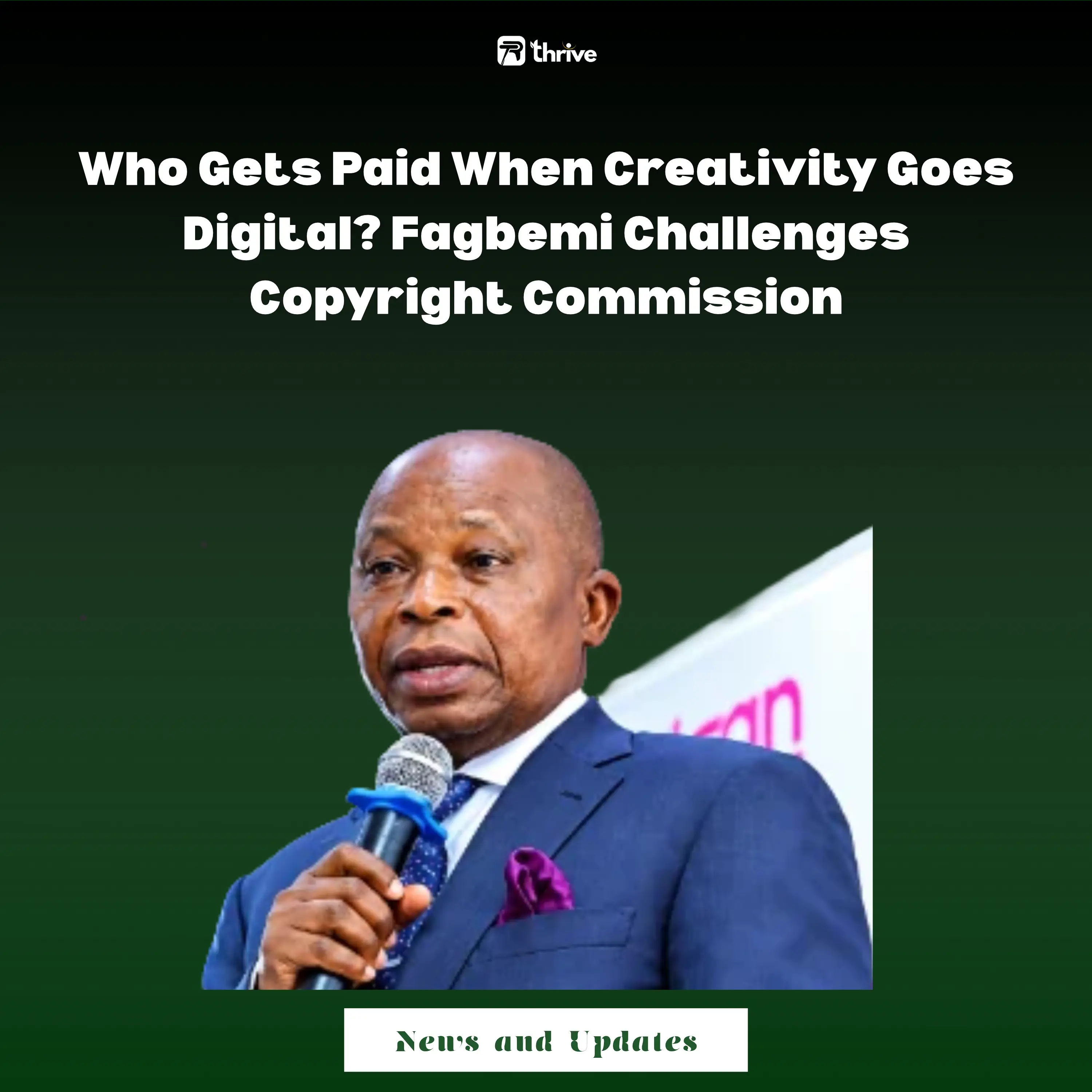
The Attorney-General of the Federation, Lateef Fagbemi, SAN, has told the Nigerian Copyright Commission (NCC) to sharpen its fight against online piracy, prepare itself for the questions artificial intelligence raises for creative work, and tighten how royalties owed to artists and creators are tracked and paid out.
He spoke as special guest of honour at the NCC's four-day Performance Review and High-Level Strategic Retreat 2026 in Abuja, held under the theme "Consolidating the Gains, Sustaining the New Copyright Narrative through Strategic Management" and reported on 24 November 2026. The retreat looked back at the Commission's work between January 2019 and October 2026.
On piracy, he wants the Commission to push harder on enforcing the online infringement provisions of the Copyright Act 2022, saying the Copyright Action Plan concluded in September should now turn into joint operations between agencies, better sharing of intelligence, and visible drops in piracy levels, backed by a public campaign on respecting intellectual property and buying through licensed channels.
On artificial intelligence, his message was essentially to get ahead of the problem: the Commission, he said, needs to build the institutional know-how to handle what AI means for human creativity before the technology moves faster than the agency's ability to respond.

He spent considerable time on royalties and levies, calling for tighter supervision so that money owed to copyright holders is properly collected, tracked and actually reaches them, rather than getting lost somewhere in the administrative chain. He framed the stakes in economic terms, describing music, film, publishing, broadcasting, software and digital content as serious economic assets, and said the Commission should ultimately be judged by what it does for creators' incomes, for investment in the sector and for jobs, not simply by how much enforcement activity it reports.
He also pressed for modernisation: a faster, more predictable electronic copyright registration system, and better training, welfare and incentives for NCC staff. On accountability, he proposed monthly internal performance reviews and quarterly reports to the Federal Ministry of Justice, welcomed the idea of making the retreat an annual fixture that checks progress against the previous year's promises, and insisted the exercise needs to produce an actual plan of action rather than a document that sits unread afterward. He paid tribute to the Commission's pioneer Director-General, Moses F. Ekpo, and earlier leaders, and praised its Distinguished Command Trophy initiative. In return for stronger discipline and service delivery from the Commission, he pledged continuing policy backing from the Ministry of Justice.
NCC Director-General Dr. John Asein said the retreat was meant to look past headline performance figures and confront the practical problems facing the Commission's operations in the states, and promised a full report back to the Ministry of Justice. He thanked the Ministry for helping secure the copyright levy, which he said has given a fresh lift to the creative sectors, particularly literature, music and film.
With Nigeria's creative industries expanding quickly on the back of music, film and digital content, Fagbemi's remarks put copyright enforcement, and whether royalties actually reach the people who earned them, on the government's economic agenda rather than treating it as a narrow regulatory matter.
Was this story helpful?


Responses (0)
No comments yet. Be the first to share your thoughts.