

Court Orders NMDPRA to Keep Issuing Fuel Import Licences as Competition Battle Deepens
A Federal High Court in Abuja has ordered NMDPRA to continue issuing and renewing fuel import licences for three major marketers, ruling that regulatory discretion must operate within the Petroleum Industry Act and its competition safeguards.
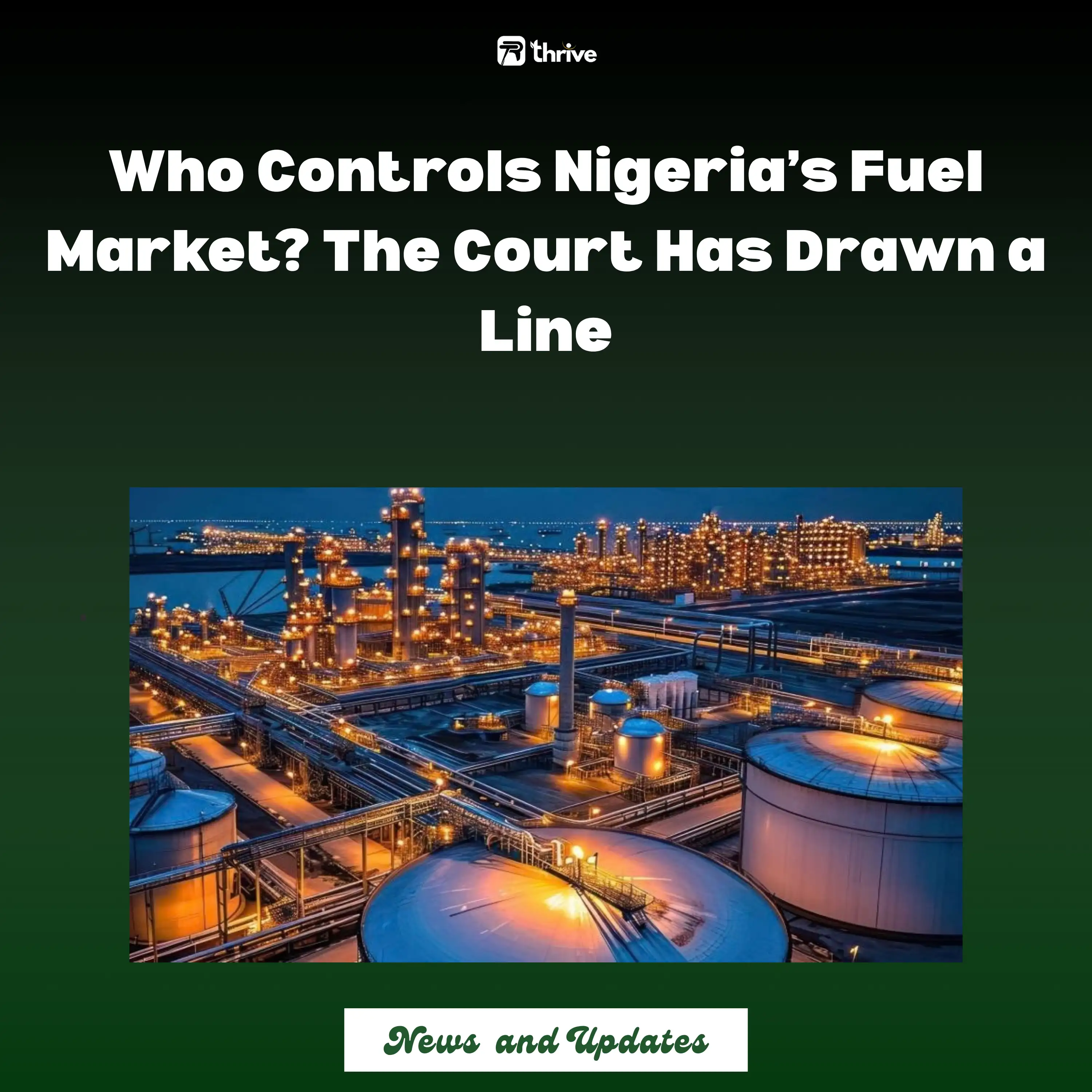
A Court Order With Consequences for the Fuel Market
The Federal High Court in Abuja has ordered the Nigerian Midstream and Downstream Petroleum Regulatory Authority (NMDPRA) to continue granting, issuing, extending and renewing petroleum products import licences for Matrix Energy, AA Rano and AYM Shafa, provided the companies satisfy applicable statutory and regulatory requirements.
Delivering judgment on September 28, 2026, Justice Inyang Ekwo held that the regulator’s refusal to issue or renew the licences was in direct non-compliance with the Petroleum Industry Act (PIA) 2021. The court declared that the three marketers were entitled to the relevant licences upon meeting the conditions prescribed by the authority.
The companies had approached the court after alleging that, since July 2025, their licences had been granted or renewed only sporadically. They argued that the restriction undermined competition and strengthened the market position of domestic refiners.
Competition Versus Regulatory Control
At the centre of the dispute is the relationship between the PIA and the Federal Competition and Consumer Protection Act.
The court relied on relevant provisions of the PIA, read alongside Section 72 of the competition law, to emphasise NMDPRA’s obligation to promote competition and prevent abuse of dominant market positions and restrictive business practices.


The judgment does not, however, strip NMDPRA of its regulatory authority. The regulator retains powers over the grant, modification, renewal, suspension and cancellation of licences, subject to the governing legislation.
The distinction is significant: the court has not declared that every applicant must receive an import licence regardless of compliance. Rather, it has held that eligible operators cannot be denied licences in a manner inconsistent with the statutory framework.
The Dangote Question Remains Before the Courts
The ruling arrives amid a wider dispute over the balance between imported petroleum products and Nigeria’s growing domestic refining capacity.
Dangote Petroleum Refinery has separately challenged the continued issuance of fuel import licences, arguing that imports should be permitted only where domestic refineries cannot meet national demand. The refinery’s separate litigation remains pending, with further proceedings reported for October 7.
The Abuja judgment therefore does not finally resolve the broader dispute over the role of imports in Nigeria’s fuel market, nor does it determine the outcome of Dangote’s separate case.
What it does establish is a significant legal constraint on how the regulator exercises its licensing powers. As domestic refining expands and importers defend their market access, the next stage of litigation may help clarify how the PIA’s competition obligations should operate alongside Nigeria’s evolving energy policy.
Was this story helpful?



Responses (0)
No comments yet. Be the first to share your thoughts.