
Court Convicts 21 Firms Over Unlicensed Investment Schemes, Imposes ₦630m in Fines
A Federal High Court in Lafia has convicted 21 companies for operating financial investment businesses without the required licences, imposing ₦630 million in fines and daily penalties that raise fresh questions about regulatory compliance and investor protection.
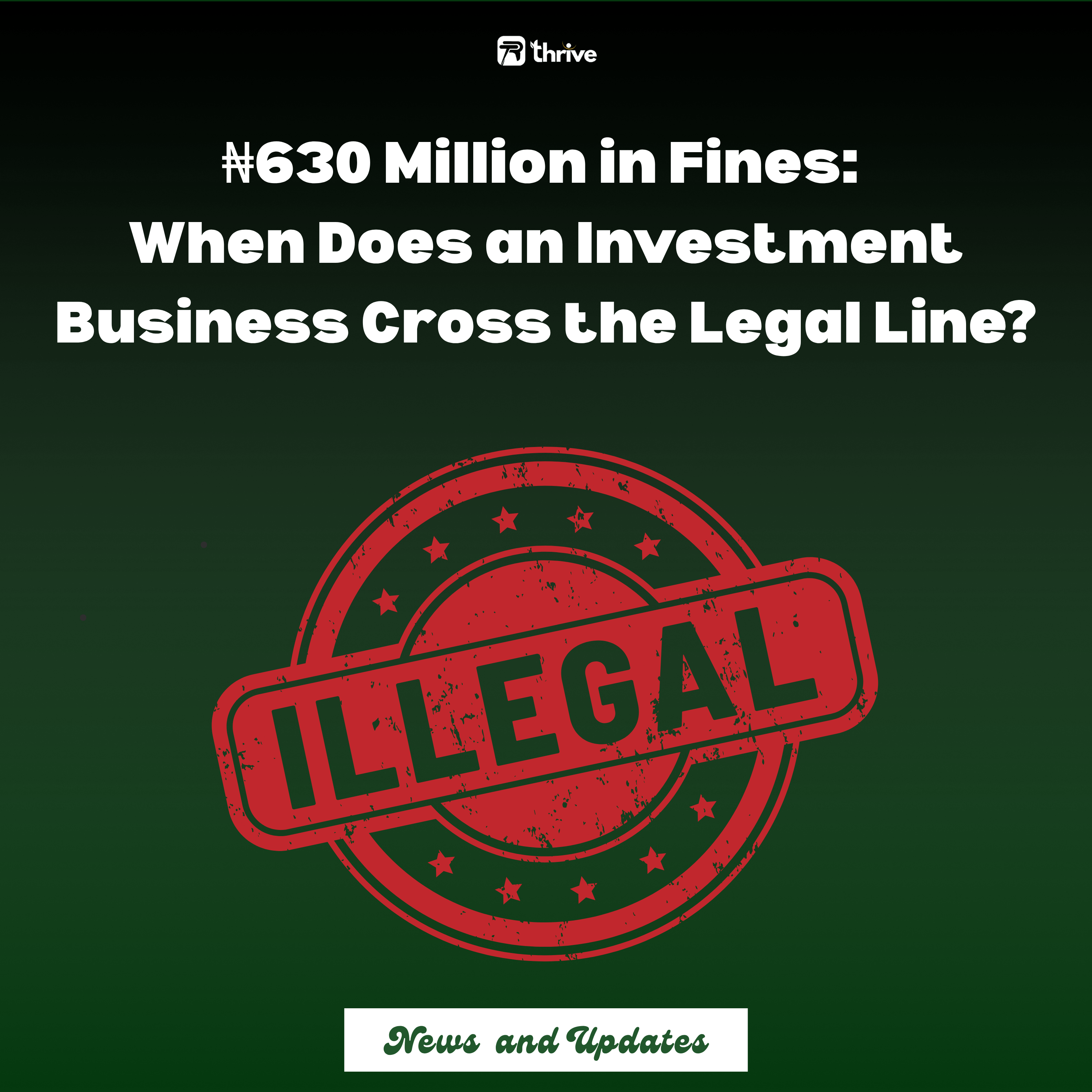
21 Companies Convicted in Investment Licensing Case
The Federal High Court in Lafia, Nasarawa State, has convicted 21 companies for operating financial investment businesses without valid licences from the Securities and Exchange Commission (SEC), imposing fines totalling ₦630 million.
Justice Anyalewa Onoja-Alapa sentenced each company to a ₦30 million fine and ordered an additional ₦200,000 for every day the offence continued. The convictions followed separate one-count charges brought by the Economic and Financial Crimes Commission (EFCC), with the companies arraigned on September 15 and 16, 2026.
Among the companies convicted were Qnet Nigeria Limited, Qnet Professional Skill Academy Limited, Omega Pro Global Resources, Kwakol Markets Limited, Credio Banco Limited and Norland Global Limited.
According to the EFCC, investigations followed intelligence linking the companies to suspected investment fraud and the operation of financial businesses without the required regulatory approval. The commission presented investigative reports, witness testimony and documents obtained from the Corporate Affairs Commission and SEC.
The Licence Question Under Nigerian Law
The prosecution was based on Section 57(1) of the Banks and Other Financial Institutions Act 2020, which restricts the operation of specialised banking and other financial-institution businesses without the required licence.
The charge against some of the companies specifically concerned advertising and providing financial investment management services without a valid SEC licence.

The legal distinction is important. Registration with the Corporate Affairs Commission does not, by itself, authorise a company to carry on every form of regulated financial business. A company may be properly incorporated and still require separate regulatory approval for its activities.
The EFCC also stated that the companies' promoters had been invited for questioning during investigations but did not honour the invitations. None of the companies appeared in court during the proceedings, prompting the prosecution to request that not-guilty pleas be entered on their behalf. The court allowed the trial to proceed, heard the prosecution's evidence and subsequently convicted them.
What the Convictions Mean for Investors and Businesses
The decision reinforces the legal consequences of conducting regulated investment activities without the necessary approvals. It also places renewed attention on the responsibilities of businesses that solicit funds or offer investment-management services to the public.
For prospective investors, the case highlights the importance of verifying a platform's regulatory status rather than relying solely on its incorporation documents, marketing materials or promised returns.
However, the convictions should not be interpreted as establishing that every investment business operating online is unlawful, or that every investor connected to the companies suffered fraud. The reported convictions concern the charged licensing offences.
The wider message for Nigeria's financial sector is that incorporation, regulatory licensing and lawful investment operations are distinct requirements and businesses that cross those boundaries risk substantial financial and legal consequences.
Was this story helpful?



Responses (0)
No comments yet. Be the first to share your thoughts.